









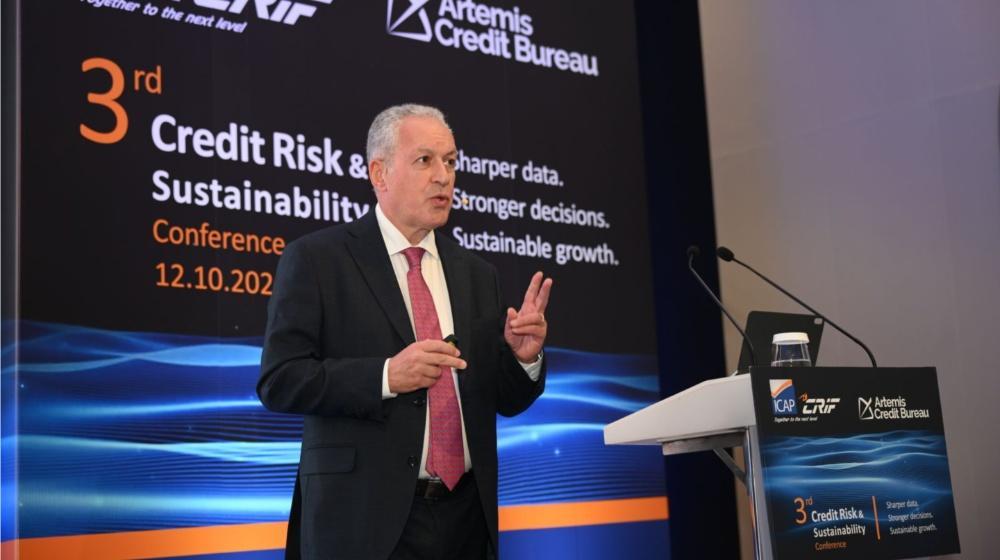
Serko Kougioumtzian presented the findings of the “Cyprus Market Survey – Credit Risk Management and Assessment of Credit Policies” during his keynote speech at the 3rd Credit Risk and Sustainability Conference, highlighting how Cypriot businesses manage credit risk, assess customers and prepare for emerging challenges.
Conducted in June, the first survey of its kind in Cyprus collected 153 responses from approximately 5,000 businesses approached. The findings largely reflect the country’s SME sector, with 65% of respondents reporting annual turnover below €10 million and around two-thirds employing fewer than 50 people.
Kougioumtzian highlighted that 70% of businesses systematically monitor credit risk, while 60% have an approved credit policy. However, fewer than half review their policies annually, and only 13% have a dedicated credit control department. Senior management remains primarily responsible for credit decisions, particularly within smaller and family-owned businesses.
The survey revealed relatively low levels of bad debt, with approximately two-thirds of respondents reporting bad debts below 2% of turnover. Nearly eight in ten businesses offer credit terms of up to 60 days, reflecting the typical payment cycle across the Cypriot market.
Economic uncertainty remains the leading concern, identified by seven in ten respondents as a key factor affecting credit risk. Rising costs and difficulties collecting outstanding payments were also significant challenges.
ESG integration is gaining momentum, although implementation remains uneven. Approximately 41% of respondents have not incorporated ESG criteria into their credit control processes. Nevertheless, businesses increasingly recognise their potential to improve credit assessments and reduce risk.
“The market recognises the growing importance of ESG in credit control,” Kougioumtzian noted, highlighting expectations that sustainability considerations will play a greater role in future credit assessments. Six in ten businesses anticipate ESG criteria becoming more important in their credit management practices.
Technology also emerged as a major strategic priority, with eight in ten businesses planning to invest in credit risk management applications over the next three years. Improving collection procedures, updating customer databases and strengthening staff training were additional priorities.
Artificial intelligence adoption, however, remains at an early stage. While 47% of respondents reported using AI to a small or moderate extent, a similar proportion reported no adoption, and only 5% indicated extensive or very extensive use.
Concluding his presentation, Kougioumtzian expressed the hope that a follow-up survey in approximately 18 months would reveal measurable progress in technology adoption, ESG integration and credit risk management across Cyprus.
Also read:Marios Skandalis: ESG is a strategic investment in Cyprus’s economic future
