









Artificial Intelligence is already changing the way businesses operate and people work. The big challenge, however, is not simply adopting the technology, but harnessing it properly so that it creates real value without losing the human element.
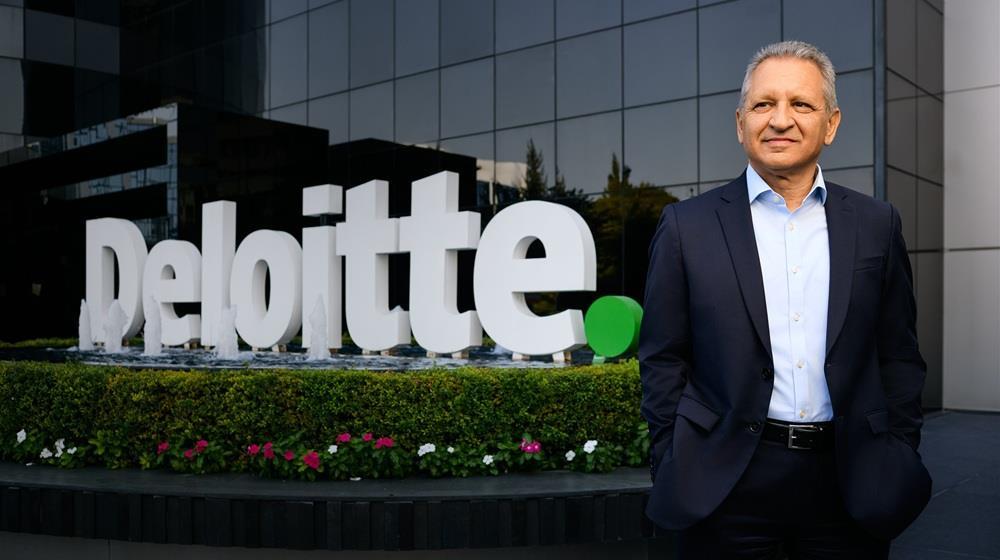
In an interview with InBusinessNews, Deloitte Cyprus CEO Pieris Markou talks about the changes that AI brings to the daily lives of businesses and employees, on the occasion of Deloitte's new 'The State of AI in the Enterprise: The Untapped Edge - 2026 AI report.'
It explains why Artificial Intelligence should not be seen as a threat to jobs, but as a tool that can enhance human potential, increase productivity and free up time for more creative and meaningful work.
At the same time, it highlights the skills that will gain greater value in the coming years and the role that businesses themselves are called upon to play in preparing their people.
However, for Pieris Markou, the message is clear: the future does not lie in the competition between humans and Artificial Intelligence, but in their cooperation. And those who learn to harness this cooperation will be better prepared for what comes next in work.

Deloitte recently released 'The State of AI in the Enterprise: The Untapped Edge - 2026 AI report.' Can you briefly summarise its main findings?
One of the key findings of this year’s State of AI report is that in many organisations, Artificial Intelligence (AI) has moved from experimentation to mainstream adoption in daily operations, at the frontline and in direct customer interaction. This “transition” is The Untapped Edge, that the true value of AI emerges when we move from ambition to action, redesigning business models and leveraging it for deep transformation of the organisation.
Another important conclusion concerns the synergy of humans and AI. The organisations that report the greatest benefits are those that invest in technology in a balanced way as well as in the skills of their people. At the same time, the trust, ethical, transparent and safe use of AI emerges as a new competitive advantage, strengthening the trust of customers and employees.
Finally, an important point of the study is that the two trends that will influence the next phase of development are Sovereign AI, which ensures that it operates within specific legal and local frameworks, and Agentic AI, which creates autonomous AI systems.
How is the role of employees affected?
However, among other things, the report highlights that the value of AI emerges when it is integrated into business operations. How does this change the role of employees within the organisation?
Integrating AI into the core of businesses fundamentally changes the role of workers, transforming the human factor from a simple performer of routine tasks to a strategic orchestrator. This requires redesigning tasks and work roles, upgrading their role and making work more creative and meaningful.
AI can free people from time-consuming, repetitive tasks and routine processes, enabling them to focus on what produces real value: solving complex problems, strategic decision-making, innovation, and managing human relationships.
This is something we are already seeing in our own industry with automation that has already changed the daily lives of our people. For example, with technology taking over the bulk processing of data, a lawyer or accountant is freed up to function as a strategic advisor much earlier in their career.
The report also highlights a paradox: while the possibilities are growing, 84% of businesses have yet to redesign employee roles around AI. When this is done right and AI is effectively integrated into core operations, the role of people, particularly in service sectors, which form the backbone of the Cypriot economy, will change radically.
There is often a concern that artificial intelligence will replace jobs. Based on the report's findings, what is the real message to workers?
The concern is understandable, but the real message is clear: AI is not coming to replace humans, but to enhance and facilitate their work by taking on specific tasks, allowing them to focus on higher-value activities.
This, of course, means that we will all have to adapt to the new realities. Particularly in the Cypriot market, where finding and retaining skilled talent is one of our biggest challenges, I expect AI to function as a productivity driver and fill existing gaps, not as a mechanism for replacing people.
The skills
What skills do you think will be most important in the coming years in an environment where AI is an everyday tool?
In an environment where AI becomes an everyday tool, human skills become even more important as technical tasks are automated. As the report states, 53% of companies are currently focused on “AI Fluency,” but it is important to combine it with other capabilities beyond technical familiarity.
Critical and analytical thinking, the evaluation of AI results and conclusions, to challenge, identify gaps or biases, and ensure compliance are key skills that will become even more important in the coming years. Equally important will be emotional intelligence, empathy, communication, leadership skills, and teamwork. Finally, the willingness to continuously learn, redefine the way we work, flexibility, and adaptability.
In a service-based economy, such as Cyprus', trusting relationships with customers and partners are a skill that no AI can replicate.
How can an organisation prepare its human resources to work effectively with AI tools instead of treating them as a threat?
Based on our experience implementing internal AI tools, the most effective way is through a holistic approach to change management. Employees should be involved from the beginning in the design of the AI implementation, so that they can understand in practice how it can improve their daily work, for example by asking them to identify the most repetitive or less creative processes in their daily lives and co-design how AI can relieve them of them.
At the same time, it is equally important to create a safe environment and a culture of experimentation, which will allow them to gradually familiarize themselves with the new tools, and clear communication and support from leadership about why this transition is being made and what value it creates. This will also prevent any reservations that may arise by limiting uncertainty. When there is participation and a clear vision, AI is treated more as an empowerment tool and less as a threat.

Business and human element
How can a business leverage AI without losing the human element that characterises it?
Humans must remain at the center of decision-making. AI can handle large amounts of data processing, faster pattern recognition, and reporting. However, the final judgment, evaluation, and communication remain with humans.
In Cyprus in particular, where many relationships between businesses are deeply human-centric and based on personal contact and long-term trust, technology can significantly enhance efficiency by taking over much of the 'back-office', but communication with the customer, the ethical weighing of a decision and personalised contact remain quintessentially human functions that cannot be replaced.
If you had to give a message to employees who are wary of Artificial Intelligence, what would it be?
Don't see artificial intelligence as a threat, or an adversary coming to challenge you and take your job. Treat it as a digital tireless partner that can significantly enhance your capabilities. Embrace technology and let it take over the most boring, time-consuming and repetitive parts of your work, freeing up your valuable time for what has value and makes you unique and irreplaceable: creativity, judgment, strategic thinking.
The right attitude is not fear, but adaptation, and those who learn to work with this technology will be better prepared for the future of work.
(Source: InBusinessNews)
