









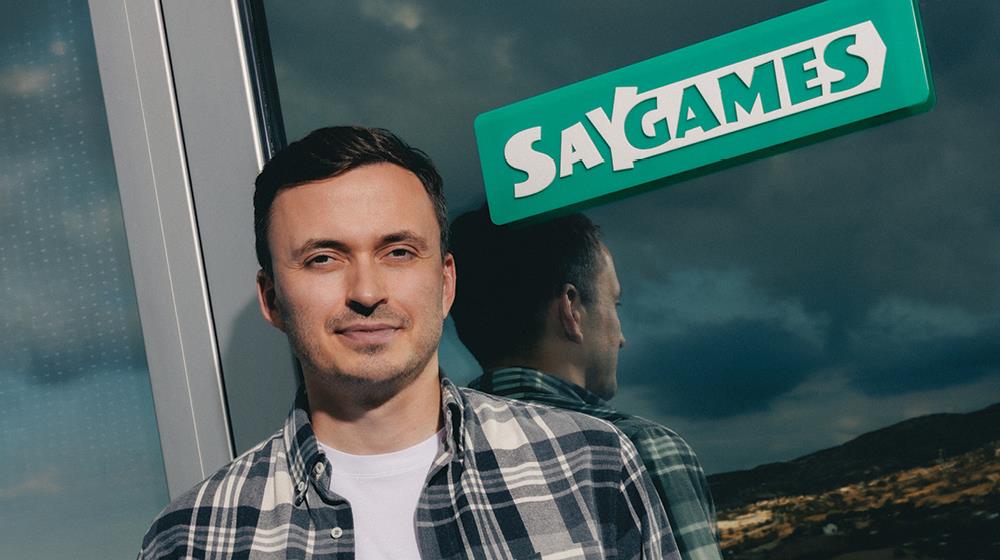
"We’ve built a strong ecosystem around our publishing business and actively supported the relocation of partner studios to Cyprus," Yegor Vaikhanski, CEO and Co-Founder, SayGames, notes, going on to underline, "We didn’t just point the way – we walked it with them, tailoring support to each partner’s needs: company formation, operational setup, local advisors, staff relocation, banking and more. Over time, a genuine ecosystem formed around SayGames, with partner studios building both their businesses and their lives here."
In a recent interview with GOLD magazine, Vaikhanski also talks about what first drew SayGames itself to Cyprus, where it established a presence in 2020. SayGames also has offices in Poland and collaborates with employees and partner studios across Europe, North America, Asia, and other international markets.
With 250 employees globally and 50 in Cyprus, SayGames' most successful titles so far include My Perfect Hotel, Tower War, DOP (Draw One Part), My Little Universe, Little Farm Story, and Black Deck. It is also worth noting that SayGames is repeatedly ranked among the Top 5 mobile game publishers by global downloads.
Speaking to GOLD, the CEO and Co-Founder goes on to describe the company’s core business model and game development strategy and the key factors currently influencing your company’s operations and strategic decision-making.
Vaikhanski, in addition, shares what he considers to be the most significant recent industry trends and growth drivers and reveals which of these he expects to shape the sector over the coming years.
How would you describe your company’s core business model and game development strategy?
SayGames is a global mobile game publisher focused primarily on hybrid-casual games. Our strategy combines fast experimentation with long-term product development: we work closely with partner studios to identify promising concepts early, then help scale them through publishing, analytics, technology, user acquisition, monetisation and LiveOps expertise.
At the same time, we’ve built a strong ecosystem around our publishing business and actively supported the relocation of partner studios to Cyprus. We didn’t just point the way – we walked it with them, tailoring support to each partner’s needs: company formation, operational setup, local advisors, staff relocation, banking and more. Over time, a genuine ecosystem formed around SayGames, with partner studios building both their businesses and their lives here.
As our footprint expanded, Cyprus naturally became a major financial and operational hub for the company. Over the years, we’ve built a diverse portfolio of games, reaching more than eight billion downloads and over 140 million active users worldwide.
Today, our focus is increasingly shifting towards games with deeper engagement and stronger long-term revenue potential, particularly products driven by in-app purchases, LiveOps and evolving player progression systems. Our audience is highly global and broad, covering players across North America, Europe, Asia and emerging markets. Many of our newer projects target more engaged hybrid and midcore audiences seeking longer player lifecycles and deeper gameplay experiences. While mobile remains our primary platform, we have also successfully experimented with other platforms, including PC.
What are the key factors currently influencing your company’s operations and strategic decision-making?
One of the biggest factors is the increasing competitiveness of the global games market. Discoverability has become significantly more challenging, with thousands of new games launching every year across platforms. This raises the importance of strong publishing expertise, efficient user acquisition, analytics and long-term product positioning.
At the same time, development costs continue to grow as player expectations evolve. Audiences increasingly expect higher production quality, deeper gameplay systems, regular content updates, and polished LiveOps support, even from mobile games. This pushes companies toward more sustainable development models and longer-term product investment. AI integration is another major factor shaping the industry. AI tools are rapidly changing workflows across development, analytics, marketing and operations. Companies are now actively adapting internal processes to increase efficiency, accelerate experimentation and remain competitive in a faster-moving environment.
Finally, the industry is becoming increasingly global and interconnected, which creates both opportunities and operational complexity when working across multiple markets, platforms and international teams.
What do you consider to be the most significant recent industry trends and growth drivers? Which of these do you expect to shape the sector over the coming years?
One of the biggest shifts in the games industry today is the move away from purely ad-driven hypercasual products towards hybrid models focused on longer player lifecycles and stronger monetisation depth. More companies are now building games designed to retain players for years, with in-app purchases, LiveOps, progression systems and long-term engagement becoming central growth drivers.
At the same time, AI is rapidly becoming one of the most transformative forces across the industry. It is already reshaping content production, marketing, analytics, internal tooling, prototyping and operational workflows. AI significantly lowers the barrier to experimentation, allowing teams to move faster, test more ideas and automate many repetitive processes. Over the coming years, we expect AI to become deeply integrated into nearly every stage of game development and publishing.
Player expectations have also grown significantly – even mobile audiences increasingly expect higher production quality, deeper gameplay systems, social features and regular content updates. This is pushing the industry toward more sustainable, long-term product development strategies instead of purely fast prototype-driven approaches.
This interview first appeared in the June edition of GOLD magazine. Click here to view it.
