








The government aims to ensure the full participation of young people with disabilities in society through equal opportunities in education, training, employment and social inclusion, President of the Republic Nikos Christodoulides has said.
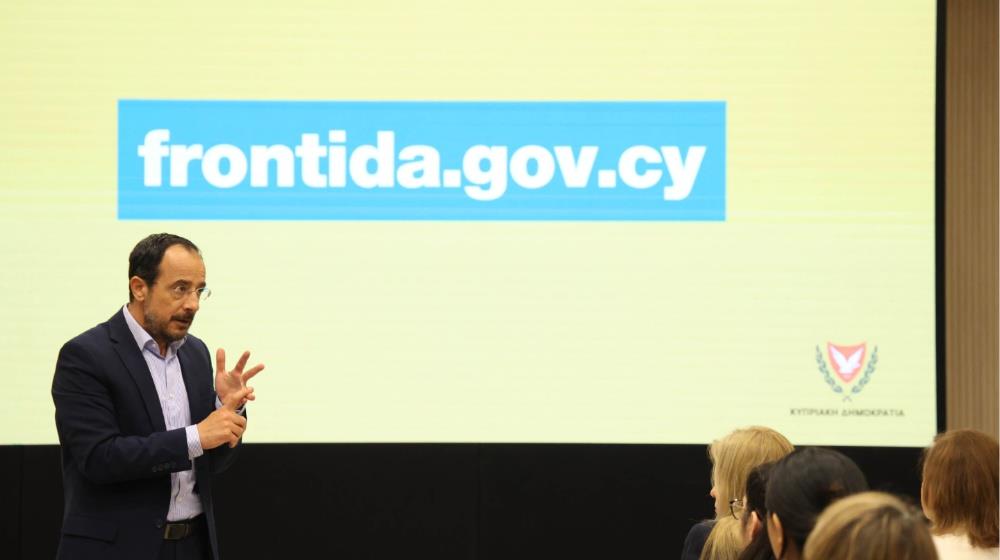
Speaking at the Presidential Palace during the presentation of a new policy framework for vocational education and training, employment and care of adults with disabilities on 4 August, the President said the initiative sought to close a long-standing gap faced by special education graduates as they moved into adult life.
“We are presenting a new and different approach to how the state stands by young people with disabilities who graduate from school and move into adult life,” he said.
President Christodoulides noted that, although the existing system provided several integration services, coordination between education, training, employment and care remained limited. As a result, many graduates did not continue into post-secondary education, find employment or attend day centres.
Three equal and individualised options
The new framework is based on three equal and individualised options.
The first concerns post-secondary vocational education and training for people with disabilities over the age of 22. From September, a new inclusion and vocational empowerment programme will be offered at the Ministry of Education’s post-secondary vocational education and training institutes in all districts.
“For the first time, an organised pathway is being created, allowing special education graduates to continue developing skills and preparing for the labour market,” the President said.
The second option focuses on employment in the open labour market through new supported employment schemes and programmes preparing young people to join social enterprises.
“We do not want these young people to remain on the margins of economic and social life,” he said. “We want them to work, create, contribute and have equal opportunities in the open labour market.”
The third option concerns creative activities and care for those who require different forms of support. Day centre programmes and services will be upgraded and modernised, while state funding will be linked to the quality of the services provided.
“None of the three options is superior to the others. They are equal,” President Christodoulides stressed, adding that the most appropriate path should reflect each person’s needs, abilities and choices.
Success to be measured by the efforts' impact
He said the policy’s success would be measured by its impact on individual lives, including young people gaining professional skills, securing their first job or participating in creative activities, as well as families feeling greater confidence about their children’s future.
“This is the true meaning of inclusion. Society becomes better when no one is left behind and everyone has choices and equal opportunities,” he said, adding that this was “not simply a political objective” but “a moral obligation” of the state.
Deputy Minister of Social Welfare Clea Papaellina said the action plan includes 30 measures covering education, employment and care. These include a new inclusion programme for special education graduates, individual employment profiles, support for participation in social enterprises and improved transport services between people’s homes, workplaces and other destinations.
She added that the plan provides for specialised programmes for people with autism, new day centres in Nicosia and Famagusta, enhanced therapeutic services and training for health professionals. “We are taking an important step towards a society that asks not what a person cannot do, but what they need in order to participate,” she said.
An important step towards safeguarding fundamental human rights
Cyprus Confederation of Organisations of the Disabled President Themida Anthopoulou described the framework as an important step towards safeguarding fundamental human rights, stressing that independent and dignified living was a right, not a privilege. She said the reform would succeed when no person with disabilities was denied education, employment, participation or the right to make decisions about their own life.
Christos Avgoustinos, President of the Pancyprian Federation of Associations of Parents of Children with Special Needs, welcomed the increased support for day centres and the introduction of employment integration professionals and personal workplace assistants. He stressed, however, that preparation for employment or the transition to a day centre should begin two or three years before pupils leave school.
Christina Flourentzou, Acting Director of the Department for Social Inclusion of Persons with Disabilities, presented the measures under the framework’s three pillars, divided into immediate, medium-term and long-term actions.
(Source:CNA)
