









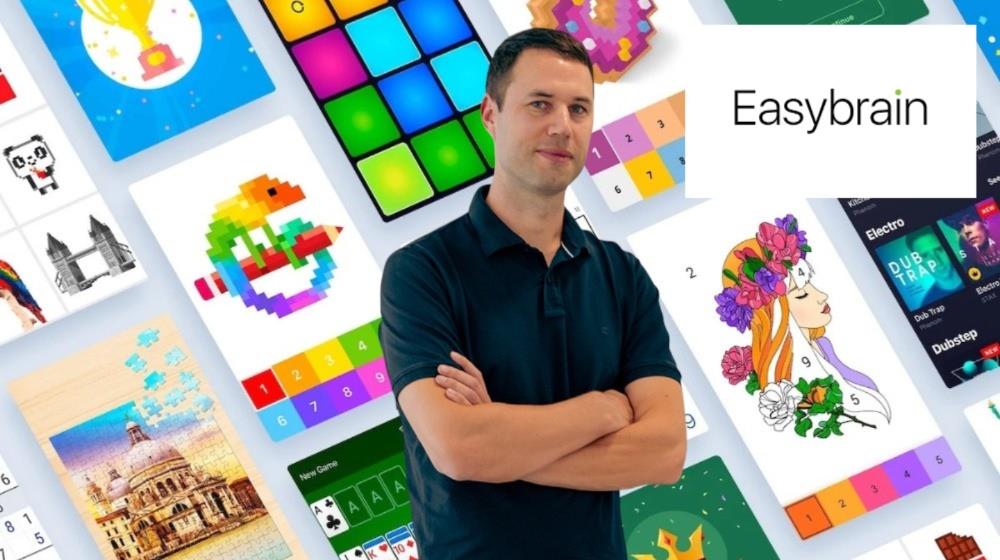
From its Limassol base, Easybrain has grown into one of the world's leading developers of free-to-play puzzle and logic games, with titles such as Sudoku.com, Blockudoku and Art Puzzle attracting hundreds of millions of players across the globe.
In a recent interview with GOLD magazine, Easybrain CEO and Co-founder Oleg Grushevich discusses the company's strategy for developing "evergreen" games, the opportunities and challenges presented by AI, and why long-term player engagement has become the defining measure of success in today's mobile gaming market.
With a presence in Cyprus since 2016, the company also has offices in Poland and Belarus and has 375 globally and 110 in Cyprus. With its most successful titles including Jigsaw Puzzles, Nonogram.com and Number Match in addition to the games mentioned above, Easybrain's notable achievements include Sudoku.com, Number Match, and Art Puzzle in 2025 being ranked among the top 15 most downloaded board games worldwide on the App Store. Also, on Google Play, Art Puzzle secured a spot in the top 10 most popular games in the Puzzle category among all countries. In the Word category, meanwhile, Crossword Master placed among the top 10 worldwide on both stores. Additionally, Art Puzzle was featured in Google Play’s Editors’ Choice collection, while Crossword Master secured a spot in the App Store’s 2025 Top Free Games chart.
In his interview with GOLD, Grushevich explains how Easybrain is navigating rising competition, evolving privacy regulations and the rapid emergence of artificial intelligence, while remaining focused on delivering high-quality experiences that keep players engaged over the long term.
How would you describe your company’s core business model and game development strategy?
Easybrain is a mobile game developer focused on free-to-play puzzle and logic games. Our core business model is based on advertising monetisation, enabling us to reach hundreds of millions of players worldwide while continuously investing in product quality and user experience.
Our strategy is to create evergreen games that can remain relevant for many years. We focus on puzzle and logic-based experiences, where we have built deep expertise and see strong long-term player demand.
Our player base is highly diverse, spanning different ages, backgrounds and levels of gaming experience. Many of our users are casual players who do not consider themselves traditional gamers. They come to our products for moments of relaxation, mental stimulation and everyday enjoyment – to take a short break, unwind after a busy day, reduce stress or keep their minds active through accessible and engaging gameplay.
Mobile remains the foundation of our business, as smartphones and tablets allow players to enjoy our games anytime and anywhere, often in short sessions throughout the day. At the same time, we also develop web projects, which help us expand access to our products and reach users in additional environments.
What are the key factors currently influencing your company’s operations and strategic decision-making?
Competition for user attention has intensified, while changes in platform ecosystems, privacy regulations and advertising technologies have made user acquisition more complex and less predictable. The mobile games market has become significantly more competitive over the past few years, with many strong products competing across the same platforms and traffic channels.
Changes such as Apple’s App Tracking Transparency framework and broader privacy-related shifts have reduced the level of visibility and precision that companies previously had in performance marketing. As a result, discoverability has become more challenging and companies need to work harder, not only to launch high-quality games but also to make sure these games can reach the right audience and continue growing over time.
At the same time, the cost of attracting users has increased, which makes efficiency in marketing, product development and monetisation even more important. AI is another major factor shaping the industry and our strategic thinking. We see it as a powerful tool that can help optimise development processes, improve operational efficiency, support creative work and strengthen analytics. Our focus is, therefore, on integrating AI in a way that increases speed and efficiency while preserving the quality, clarity and user experience that define our products.
What do you consider to be the most significant recent industry trends and growth drivers? Which of these do you expect to shape the sector over the coming years?
As the market has matured, growth has become harder to achieve through new launches alone. User acquisition costs have risen, competition for attention has intensified and players have more choices than ever before. As a result, sustainable growth increasingly depends on operational excellence, continuous product improvement and long-term player engagement.
Another important trend is the growing pressure on player engagement and retention. Players have access to a very large number of games and their expectations are higher than ever. This means that products need to deliver value quickly, offer a clear and polished experience, and remain meaningful beyond the first sessions. One of the most important industry trends is that AI is lowering the barrier to game production. This increases the overall pace of competition and makes differentiation more difficult. In the coming years, AI will likely change not only how games are produced but also how they are discovered, optimised and supported after launch. The key challenge will be to use these tools in a way that improves relevance and speed without making products feel generic or losing the quality of the player experience.
This interview first appeared in the June edition of GOLD magazine. Click here to view it.
