








At a time when Cypriot business is in a phase of transition, with new demands, new tools and different expectations from leadership, looking at the next generations of decision-makers takes on particular importance.
The 'Gen Z & Millennial Project: The New Generation of Business Leaders of Cyprus', an emblematic project by IMH that is currently underway, attempts, through interviews and articles, to map the mindset, values, ambitions and challenges of the people who are gradually shaping the new face of the Cypriot business scene.
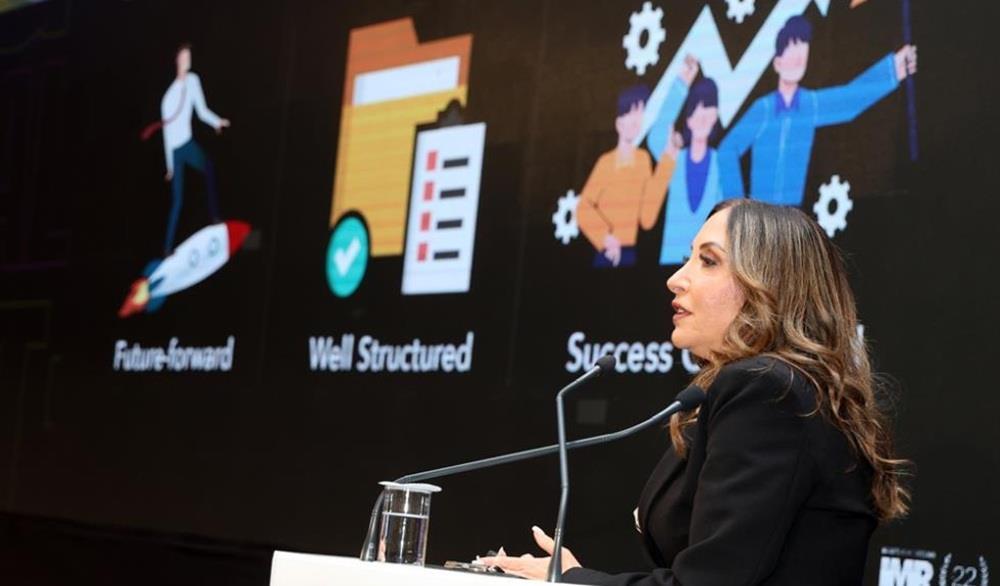
In support of the project, IMR/University of Nicosia™ conducted extensive research with young business leaders, both family business successors and self-made entrepreneurs. The findings demonstrate a generation that operates more systematically, more consciously and more humanly, emphasizing structure, transparency and technology.
Christina Kokkalou, the Managing Director at IMR/University of Nicosia™ and with many years of experience in the field of market research and socio-economic trend analysis, through this interview conveys the broader picture of a generation that is redefining what successful business and modern leadership means. As, of course, is true for previous generations, the path is not "strewn with roses" for Gen Z - Millennials either.
Let's start with the big picture. What is the basic profile of Gen Z and Millennial business leaders in Cyprus, as revealed by the research? And how does it fundamentally differ from previous generations?
The survey outlines a new generation of business leaders in Cyprus who think ahead and move with a plan in mind. Gen Z and Millennials do not rely on instinct or luck, but on systematic organisation, planning and strategy. They want businesses that are sustainable, efficient and financially secure, while at the same time, pursuing quality of life, respect for people and a healthy work environment. Whether they come from family businesses or are self-made, they share the same ambition: to evolve business and leave their own mark.
The main difference from previous generations is in the way they manage and operate. The new generation is moving away from authoritarian models and choosing more human, collaborative forms of leadership, with an emphasis on trust, transparency and the assignment of responsibilities. At the same time, the new generation is dynamically bringing technology, digitalisation and data to the centre of daily operations, not as a trend, but as a necessity. In contrast to “this is how we have always operated,” the new generation aims for businesses that operate in a more organised and modern way.
The research examines both family business successors and self-made entrepreneurs. Are these two "worlds" converging or are they two separate paths with different mindsets and priorities?
The research clearly shows that these are two different paths, but not two incompatible worlds. The starting point is different: the successors of family businesses carry history, responsibility and the need to prove their worth within an already structured framework, while the self-made ones start from scratch, with intense personal risk, uncertainty and pressure to survive, especially in the early years.
Despite differences in mindset and immediate priorities, the two “worlds” converge in how they see the future of business. Both groups emphasise modern management, technology, systematic organisation and human leadership. Where their paths meet is in the ambition of the young leaders to evolve their businesses, to escape outdated models and to leave their own, personal imprint on the Cypriot business landscape.
What are the core values that seem to guide the decision-making process of the new generation of business leaders? What do they demand of themselves and their teams?
The new generation of business leaders is guided by values that are clearly reflected in the way the business operates every day. At their core are responsibility, accountability and transparency: they seek clear rules, clear roles and specific expectations, both for themselves and for their teams. They demand, from themselves, consistency, professionalism and the ability to make decisions with depth and duration, taking full responsibility for their choices.
Accordingly, they demand commitment, collaboration and respect from their teams. They reject fear and shouting as a means of management and invest in relationships of trust, where performance emerges through meritocracy and clear rules. For the new generation, success is not measured only in the result, but also in the way it is achieved: with people who feel safe, have a say and understand their role in a shared vision.
At the management level, do you see differences in the way they exercise leadership compared to more experienced generations of entrepreneurs? How do they perceive responsibility, authority and collaboration?
Yes, the differences are clear and substantial. The new generation of business leaders is consciously moving away from authoritarian management models that were based on fear, absolute control and hierarchy. Leadership, for Gen Z and Millennials, is not identified with a position or title, but with attitude and daily presence. They perceive responsibility as a personal commitment to the business and their people, not simply as the right to make decisions.
Power is not exercised through imposition, but through the assignment of responsibilities, collaboration and clear roles. New leaders seek collaborative formations, empower their executives and invest in collective responsibility, recognising that development cannot be based on one person. Collaboration is seen as a key driver of business performance and sustainability.
What are the most important challenges that they identify as entrepreneurs today? Are there common problems, or do they change depending on whether someone is a successor or self-made?
The challenges that young entrepreneurs themselves identify have a large common basis, but differ in intensity and nature depending on their path. In any case, two issues consistently emerge: human resources and government bureaucracy. The difficulty of finding and retaining capable people, high turnover and lack of commitment directly affect the operation of businesses and limit their growth potential, while delays and the complexity of procedures act as a deterrent to investments and decisions.
Beyond these common points, the research points out that there are also individual difficulties, which vary depending on the starting point and the context of activity. However, despite the different pressures, the conclusion remains common: today's business requires resilience, flexibility and continuous adaptation to the way the business operates, as stability is not taken for granted but the result of continuous effort.
For successors, does the fact that they have "grown up" within the company act more as an advantage or as a burden? How do they experience the succession process?
For successors, the fact that they have grown up in the company acts as both an advantage and a burden. On the one hand, they have a deep knowledge of the company, strong work discipline and an emotional attachment to the subject of their work. From a very early age, they have become familiar with the responsibility, pressure and everyday life of business, but also with the company itself. On the other hand, this very identification creates a burden: the company is not just a job, but a family history and personal identity, which intensifies the fear of making mistakes and limits the sense of freedom.
The succession process is not clearly experienced as a “passing of the baton”, but as a long and often demanding transition. Successors are called upon to balance respect for the previous generation with the need to gain autonomy and a say. At the same time, they feel intense pressure to prove that they are not in their position because of a name, but because of ability. Succession, after all, is not just an organisational issue, but a process built through relationships, acceptance and the gradual assumption of responsibilities.
In reality, the succession will not always be smooth. How do young people manage it and how does this impact the transition to leadership?
Research shows that new successors do not experience succession as a momentary change of roles, but as a long-term coexistence of generations, where the previous generation remains present and active. Difficulties, frictions and doubts are seen as an integral part of the transition and not as a sign of failure. They approach this process with respect for the experience of the previous generation, recognising that the knowledge and practices that are inherited are a valuable asset and that they still have much to learn.
In this context, successors consciously choose to gain acceptance through action and consistency, avoiding conflicts. Daily presence in the business, the gradual assumption of duties and responsibilities, and the building of trust both within the family and towards the staff shape the path to leadership, which, as the research shows, is not automatically transferred but is acquired over time.
On the other hand, self-made entrepreneurs do not have the same “safety net.” What are the main obstacles they must overcome and what drives them to choose this path?
Without ready-made structures and without any margin for error, self-made entrepreneurs begin their journey knowing that every decision has a direct personal cost. The main obstacles they have to overcome mainly concern liquidity, the constant stress of cash flow and the uncertainty of the early years, where there is no predictability or financial stability. At the same time, they face difficulties in accessing financing, acquiring customers and staffing, while the responsibility for decisions is completely personal and is often accompanied by loneliness and intense psychological pressure.
Despite the difficulties, choosing this path is not simply a result of circumstances but a conscious attitude to life. What drives them is the need for creation, independence and personal establishment, as well as the desire to build something exclusively their own. Risk is not underestimated or idealised, but is treated with realism as an integral part of the journey. Endurance, perseverance and adaptability act as basic resources, transforming uncertainty into a driving force.
What is the truly "new" element that Gen Z and Millennials bring to business? Are we talking mainly about a different mindset, new skills, or a new way of perceiving work-life balance?
The truly “new” thing that Gen Z and Millennials bring to business is not a single characteristic, but a new way of thinking. They see business less as an extension of the leader’s personality and more as a system that must operate in an organised manner, using technology, data, and clear mechanisms. Digitisation and automation are not considered innovations, but rather a self-evident prerequisite for control, efficiency, and sustainable growth.
At the same time, they are redefining the way they perceive leadership and the intensity of work. They do not reject hard work, but they question the model of constant exhaustion. Work-life balance is not seen as a luxury, but as a necessary condition for endurance and continuity, both for themselves and for their teams. Thus, the “new” is not only found in what they do differently, but mainly in how they redefine modern entrepreneurship: more organised, more efficient and more human.
Based on the research findings, if you had to summarise in one sentence what it takes today for a new business leader, whether successor or self-made, to succeed, what would that common element of success be?
If it had to be summarised in one sentence, the common elements that lead to the success of a new business leader today are their ability to manage the people of the business, to efficiently organise structures and to adapt to changes, effectively utilising technology in order to build businesses that are sustainable and resilient over time.
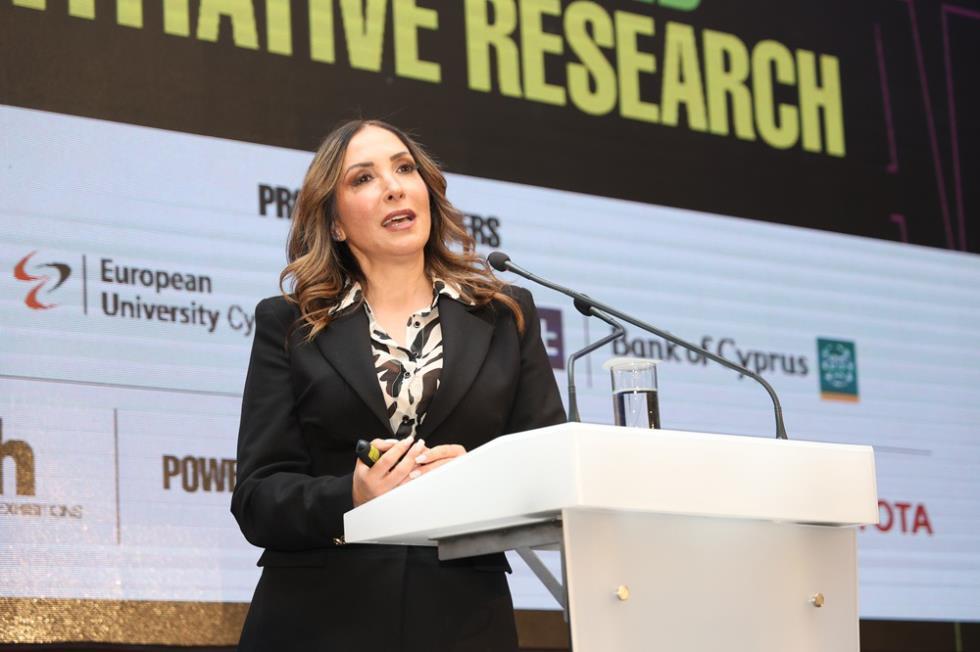
The research was recently presented exclusively for the project partners that actively support the Gen Z & Millennial Project: European University Cyprus, Bank of Cyprus, PwC, Cablenet, and Mobility Partner Toyota.
